
There’s a notion that only you and God can save you, and this is true for the German luxury automaker “Audi”. Audi’s latest generation of electric vehicles like the Q6 e-tron, and its gasoline-powered models like the Q5 and A5, haven’t caught the public’s attention. These new models aren’t quite as impressive as their competitors in the same EV segment. However, the German luxury automaker has a small team working independently of its parent company and knows Audi’s best work, making most of Audi’s work stand out to the public.
This small team was originally called Quattro GmbH when they built sports cars like the 311-horsepower 1994 Audi RS2 Avant compact wagon. The RS2 Avant was assembled by Porsche and offered nearly as much power as the Porsche 911 Turbo of the time. Since then, they have designed high-performance Audi sports cars like the 450-horsepower RS6, the Q7 variants with twin-turbo V12 diesel engines, the five-cylinder TTRS and RS3 models, the RS4 with a V8 powertrain, and the mid-engine Audi R8. These are the models every Audi owner wants because they feel like something truly great.
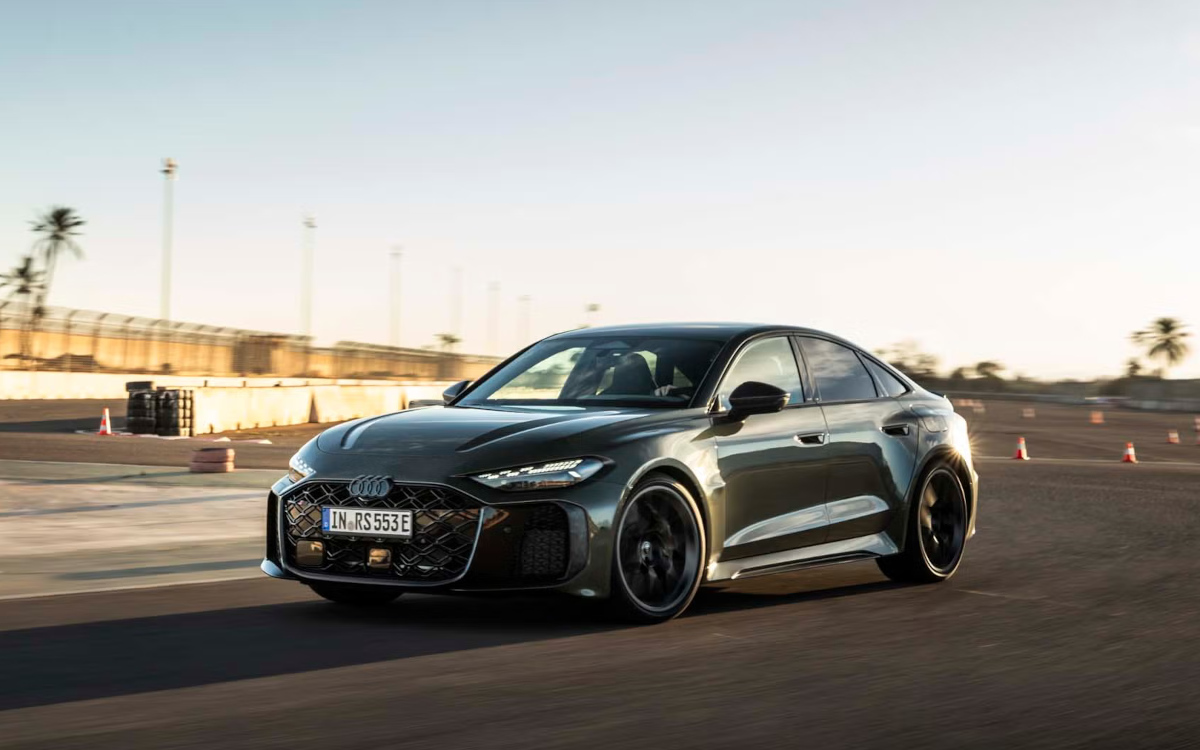
The public now knows it as the Audi Sport Group which has rescued the A5 variant, a car that was considered to have failed during the 10Best test. The Audi A5’s design is indeed a bit boring and less inspiring, but that doesn’t mean it’s a bad car. Audi Sport Group came to the rescue of the A5 with the task of turning it into a better model. The Audi A5/S5/RS5 is no longer a coupe model, but this is Audi’s previous name for the A5/S5/RS5 Sportback variant, and replaces the A4 sedan and coupe.
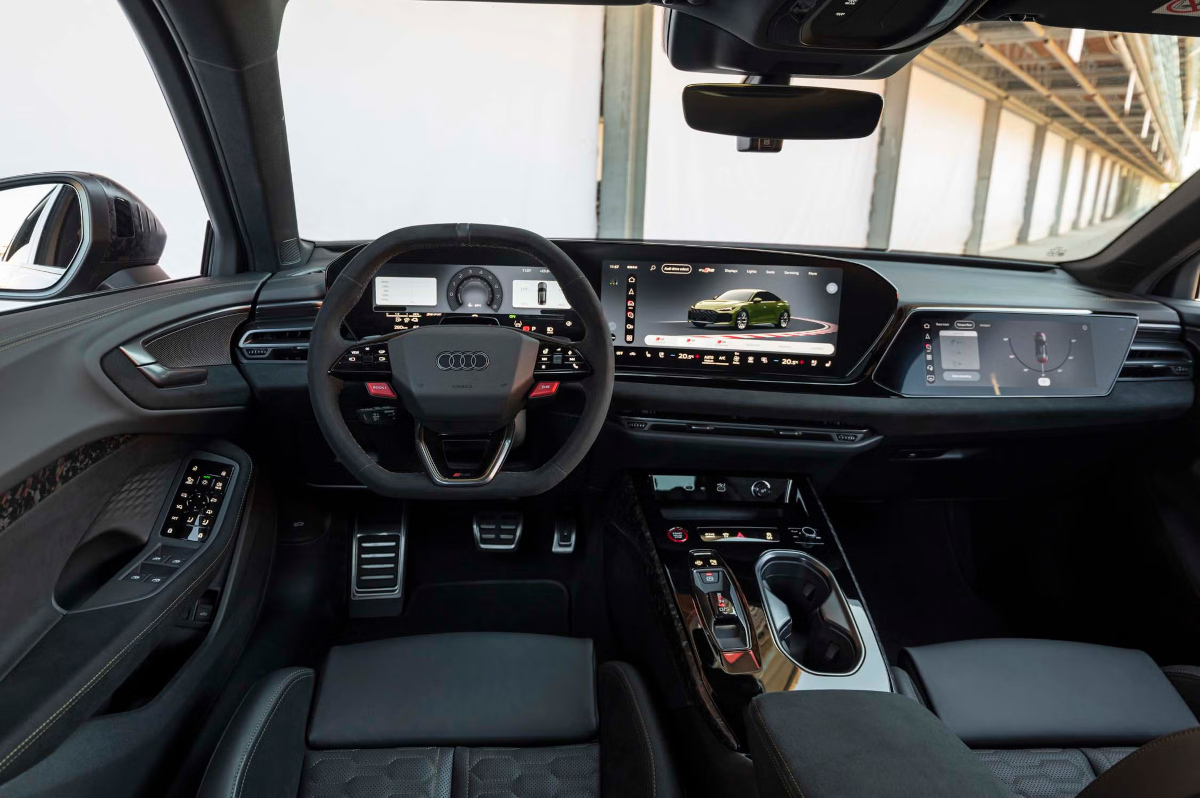
The Audi Sport then installed a plug-in hybrid powertrain into their Audi RS5, powered by a 22 kWh lithium-ion battery placed above the rear axle. The German luxury carmaker has been pursuing a 50/50 weight distribution for decades, with the RS5 achieving a 49/51 weight distribution. Meanwhile, the 22 kWh lithium-ion battery offers an estimated range of 40 miles, and Audi claims a full charge takes just two and a half hours. Drivers can store the battery for later use or set a discharge limit using a slider on the interior touchscreen, as in many PHEV variants.
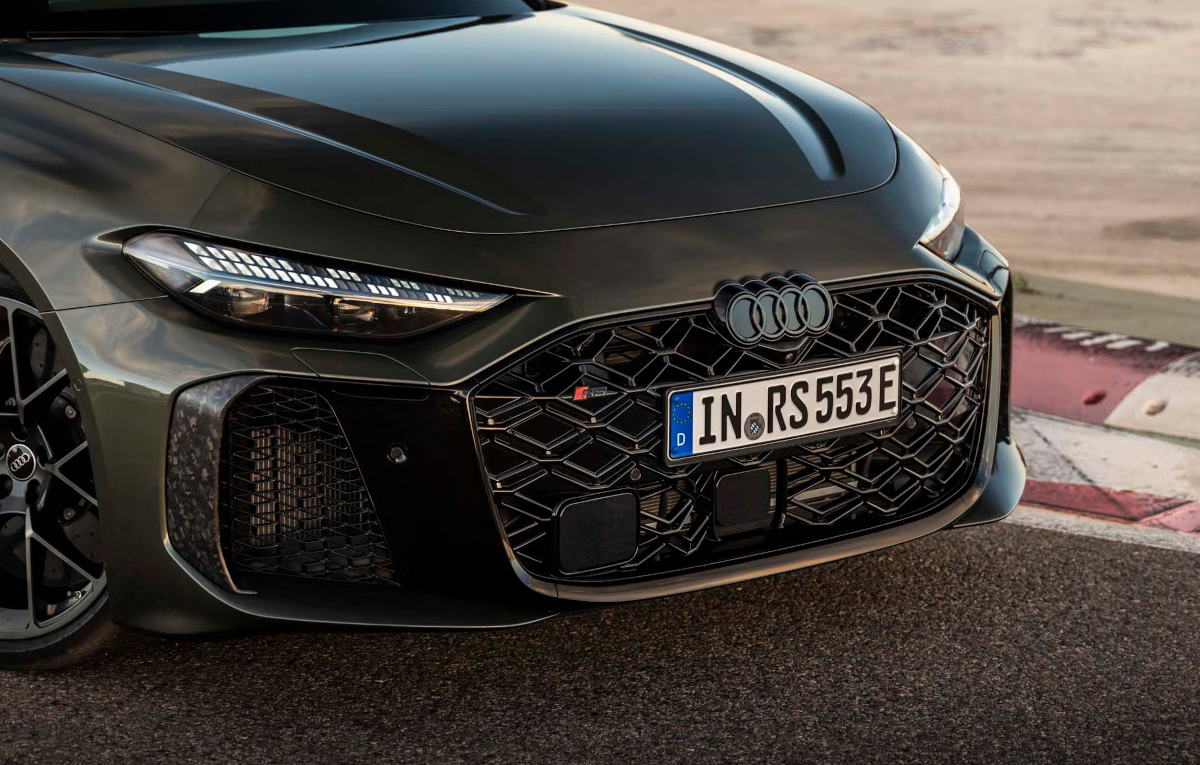
Thanks to regenerative braking, the battery is also assisted in recharging. There are two different configurations, neither of which is particularly aggressive for one-pedal driving. The V6 powertrain can contribute to battery recharging in the most aggressive driving mode. Meanwhile, the Ingolstadt-based automaker claims the latest generation RS5 weighs just 5,200 pounds.
Under the hood, the RS5 clearly needs more power than the previous generation model, with Audi’s 90-degree twin-turbo V6 engine getting a complete overhaul that is claimed to optimize and shorten the airflow in and out of the turbocharger, as well as the addition of an air-to-water intercooler. As a result, horsepower is claimed to increase from 444 hp to 503 hp, and that’s before the electric motor is involved.
The twin-turbo V6 engine is mated to a ZF 8-speed planetary automatic transmission, complete with a 174-horsepower electric motor that allows the 2027 Audi RS5 to reach a top speed of 87 mph. According to the automaker, the latest RS5 can travel up to 50 miles on electric power in the European test cycle. If the driver activates EV mode, the RS5’s acceleration is quite adequate and the driver will hear the hum of its electric motor.
The 2027 Audi RS5 is powered by a hybrid system mated to a gasoline engine, claimed to produce 630 horsepower and 609 pound-feet of torque. The RS5’s hybrid system prioritizes the electric motor when the driver activates the Balanced and Comfort driving modes. However, the V6 engine will be activated when the driver fully depresses the accelerator pedal, extending past the kick-down switch.
Audi is quite proud of the RS5’s improved starting acceleration, which it claims is strong and hasn’t even diminished. The 2027 Audi RS5 can accelerate from 0-100 km/h in 3.6 seconds, while the previous-generation RS5 Sportback accelerated slightly quicker in just 3.3 seconds. The instant response of the electric motors that makes the RS5 rocket from the starting line and then bang your head against the seatback should be comparable to the 0-100 km/h time.
The German luxury car manufacturer has long experimented with active rear differentials equipped with a clutch pack to split torque from one side to the other to assist cornering and engage the rear of the car. However, the latest generation RS5 now dispenses with the clutch pack, replacing it with a small electric motor mounted on the rear differential. This splits power between the right and left rear wheels. The 2027 Audi RS5 is equipped with Bridgestone Potenza Sport tires (285/30R-21) as standard, while Pirelli P Zero R tires are offered as an optional only. Inside the cabin, Audi Sport Group has upgraded the interior of the new RS5 with forged carbon fiber trim, Alcantara and leather. There’s also a small, round tachometer with a digital speedometer underneath.
Speaking of the release date, the 2027 Audi RS7 is expected to arrive in U.S. dealerships around the end of this year or at the latest, possibly early next year. Pricing and MSRP have not been officially announced at this time, but the next-generation RS5 is expected to be priced below the RS7 variant at $135,295. It’s also speculated that the latest RS7 will be priced close to the Cadillac CT5-V sports sedan at $102,795.